Marbling
In ceramics, bodies of different colours can be kneaded together to produce a marble-like result. But caution is needed.
Details
The practice of partially kneading together clay bodies of contrasting colors (often porcelains colored using metal oxides or stains). Most articles completely overlook the importance of choosing or developing bodies of similar firing shrinkage - otherwise stresses accumulate within and seek opportunity for release (making pieces into time-bombs). Similar-as-possible thermal expansions is also ideal if rapid temperature changes will occur (to avoid thermal shock failure).
If making your own colored porcelains it is important to consult the stain manufacturer's website to see which stains they recommend for bodies. Experimentation is needed with each color to determine optimal percentages (these vary widely, usually 5-20%). Vitreous porcelains produce brighter colours.
Related Information
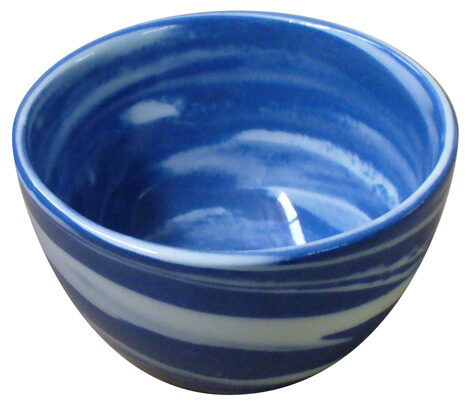
Cone 6 translucent marbled bowl by Tony Hansen
This picture has its own page with more detail, click here to see it.
A transparent glazed. It is a made from Plainsman Polar Ice in 2014 (a New Zealand kaolin based translucent porcelain) and fired to cone 6 with G2926B clear glaze. 5% Mason 6306 teal blue stain was added to the clay, then this was wedged only a few times. The piece was thrown, then trimmed on the outside at the leather hard stage and sanded on the inside when dry.
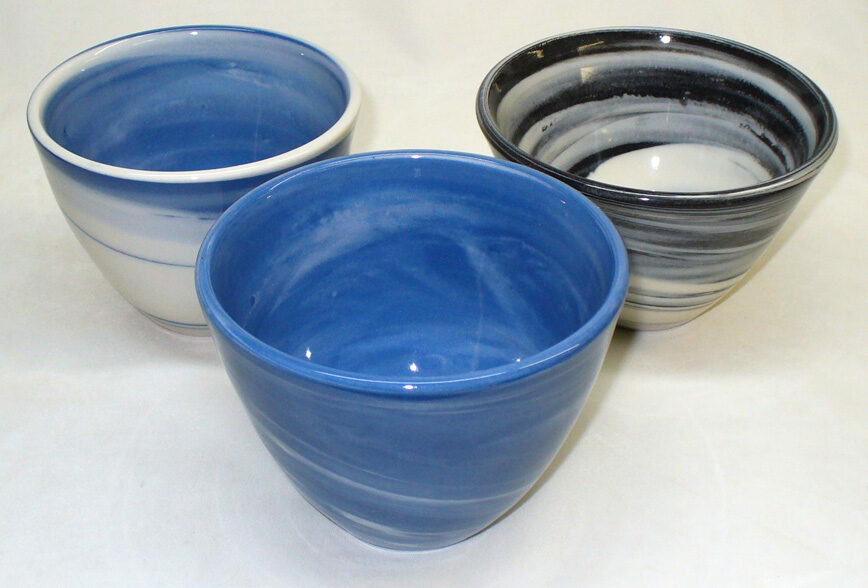
Cone 6 porcelain marbled and thrown
This picture has its own page with more detail, click here to see it.
These bowls were made by Tony Hansen using a mixture of white and stained New-Zealand-kaolin-based porcelain (Plainsman Polar Ice) fired at cone 6. The body is not only white, but very translucent.
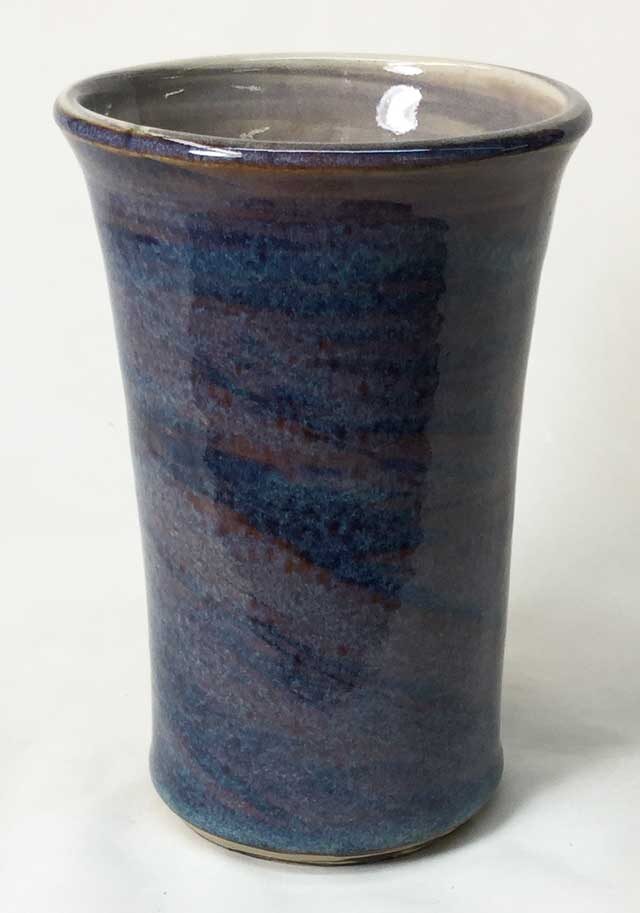
Marbled cone 6 clays with rutile blue glaze
This picture has its own page with more detail, click here to see it.
These are Plainsman M340 buff stoneware and Plainsman Coffee black wedged together. The glaze is Alberta Slip GA6E.
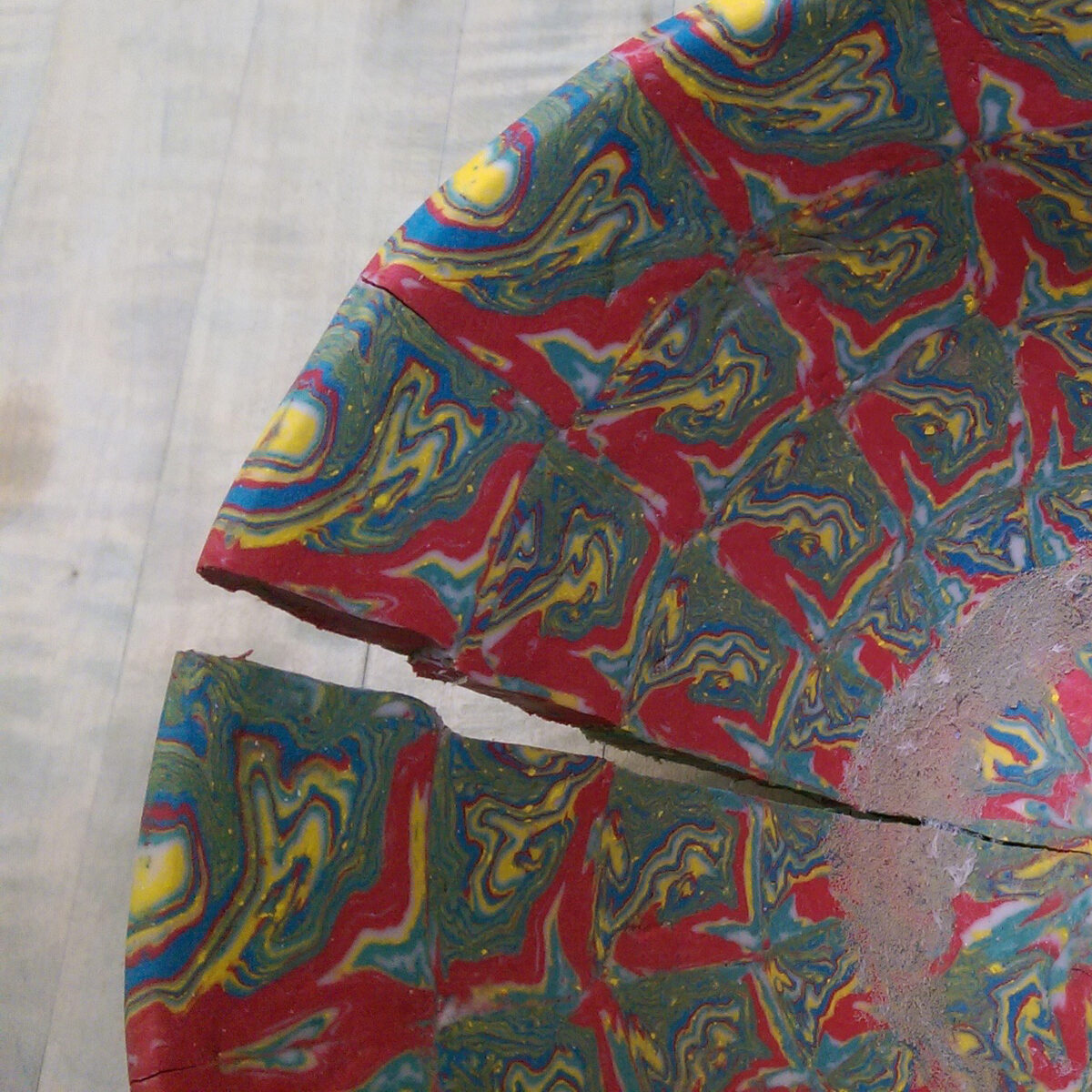
Marbling stained porcelains - Watch out for firing shrinkage differences
This picture has its own page with more detail, click here to see it.
Stains can and do influence the degree of vitrification of a porcelain. Some stains will make a porcelain more refractory (decreasing fired shrinkage), others will make it more vitreous (increasing the firing shrinkage). Obviously, the greater the percentage of stain the greater the effect. Stained porcelains having differing fired shrinkages will stress at boundaries in accordance with the degree of difference in their fired shrinkages. In this piece, you can see how the boundary between the red (more vitreous) and green (less vitreous) porcelains is the point-of-failure. The only solution is to adjust the porcelain recipe to move the fired maturity in a direction that counterbalances the effect of the stain. For example, you could employ three recipes (regular, more vitreous, less vitreous) and use the indicated one for each stain added.
Links
| Tests |
Engobe Body Compatibility Test
A bi-clay test strip curls to demonstrate the drying and fired compatibility or fit of an engobe (or slip) on a ceramic body or of two bodies for marbling. |