Throwing
Throwingceramicsplasticityphysicsbentonite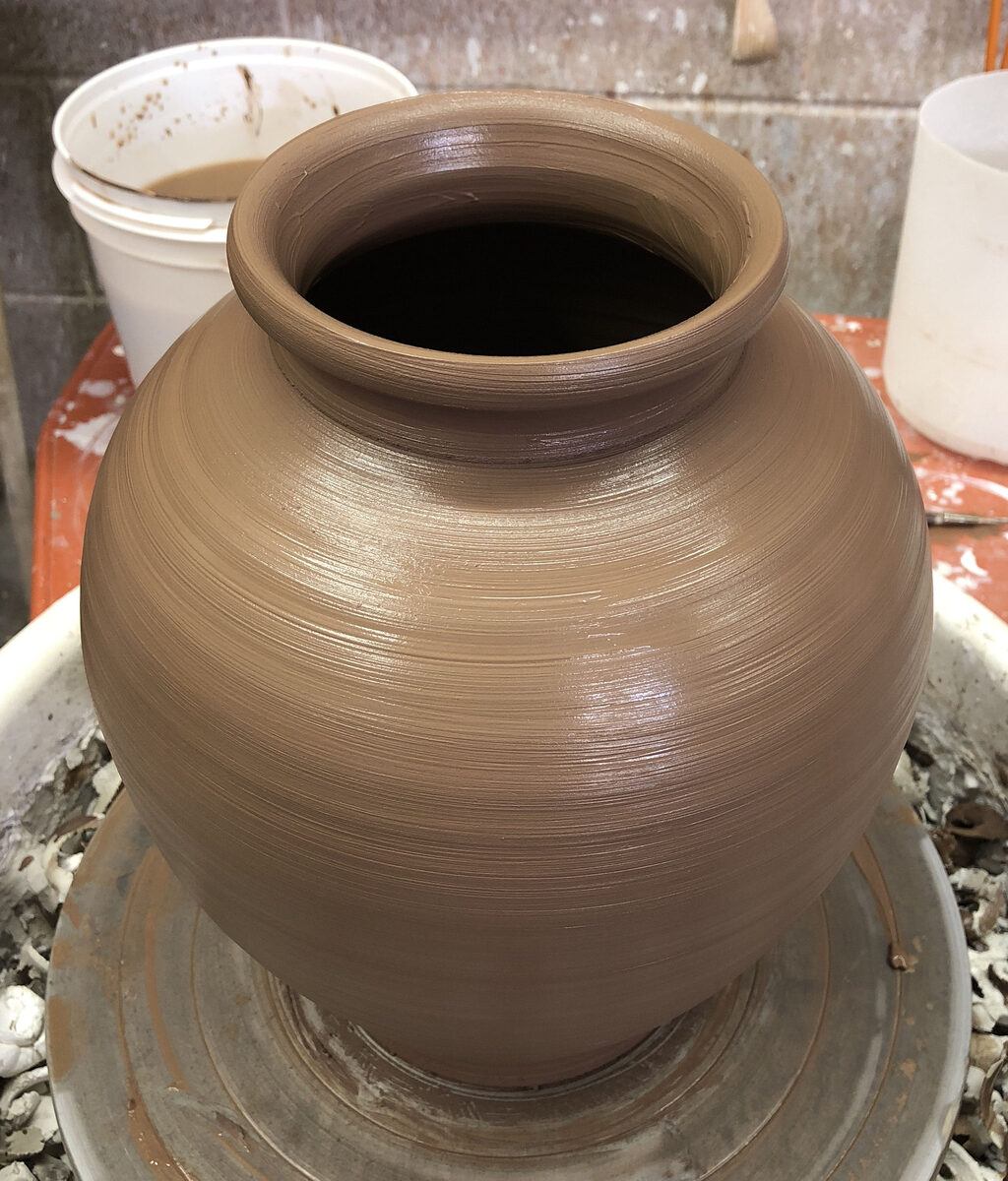
Related Information
Throwing a pot on a potters wheel
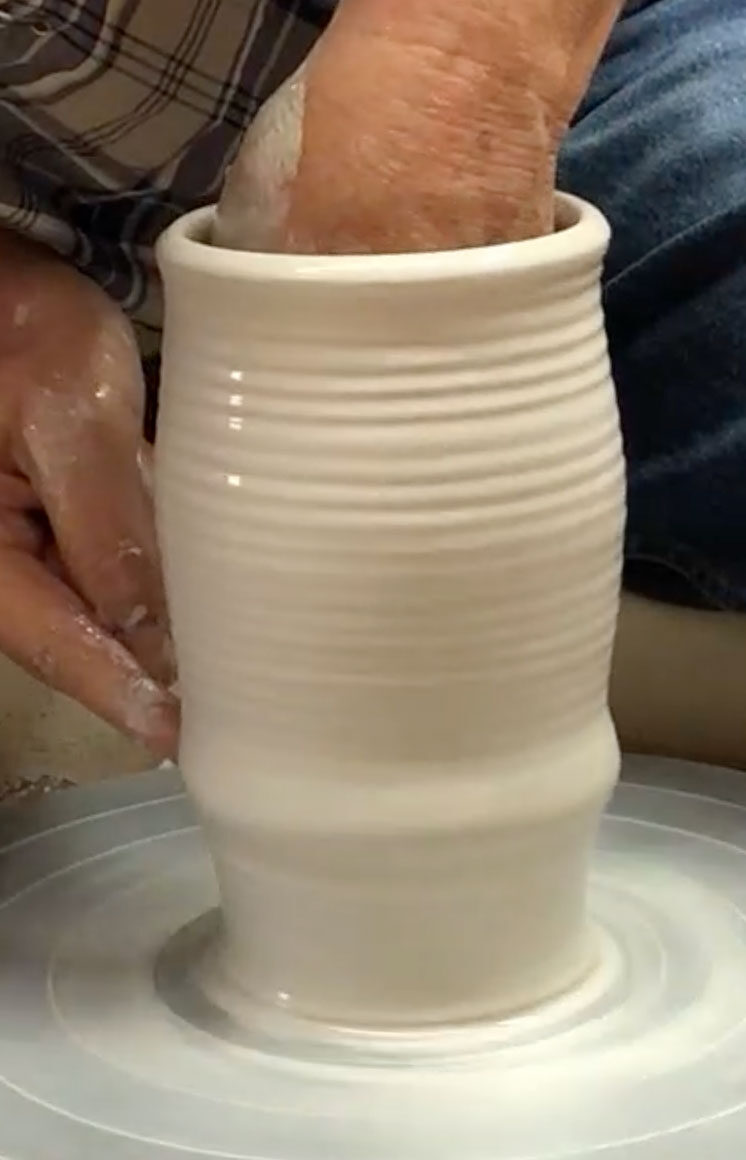
This picture has its own page with more detail, click here to see it.
Throwing a Polar Ice mug on the potter's wheel
Your browser does not support MP4 video.Polar Ice is plastic enough to be able to throw mugs having walls as little as 3mm thick (bottom-to-top). It is very sticky if too soft so I stiffen it on a plaster table before throwing it. The video is speeded up in the middle section.
Birds-eye-view throwing a terra cotta mug
Your browser does not support MP4 video.The video is speeded up in the middle portion. I am wearing camera glasses so please forgive the jerkiness and off centre of the video. This type of clay body is normally very plastic, better throwers must consciously be careful not to make walls too thin.
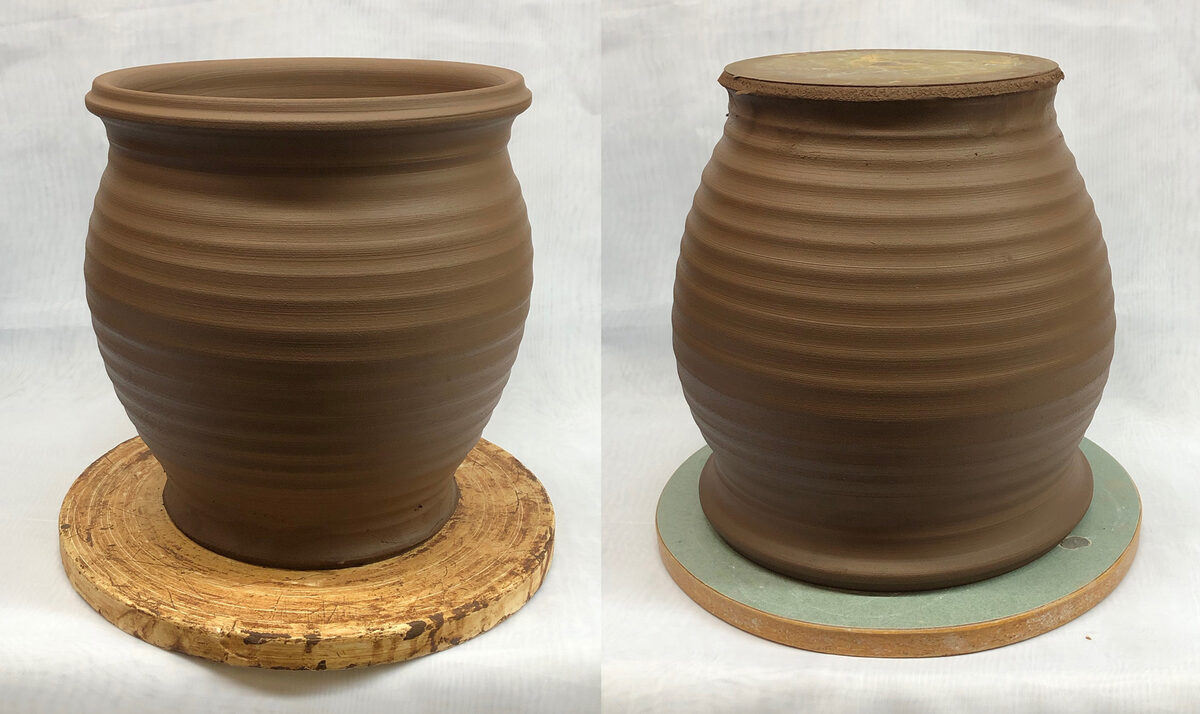
Why throw on a plaster bat when making larger pieces?
This picture has its own page with more detail, click here to see it.
To achieve more even drying. As soon as was practical after throwing (a few hours), I covered the piece with a cloth and then put a garbage bag over it. While that put the upper section a little ahead of the base in drying, over night the base caught up (the plaster sucks the water out of it, even the walls of the piece stiffen). In the morning I remove the plastic and within an hour or two it is ready to lift off the bat and turn over, shortly after that I can trim it. I secure each plaster bat to the wheel-head using a "Batmate", that works extremely well. To stick the clay to the plaster well I apply a thin layer of slip, round off the piece of clay and firmly slam it down onto the plaster (if it is not rounded it will not stick as well or may break the bat). This is quick and effective to achieve the even drying needed to avoid a drying crack. This method is especially important for large plates and bowls, which often suffer s-cracks.
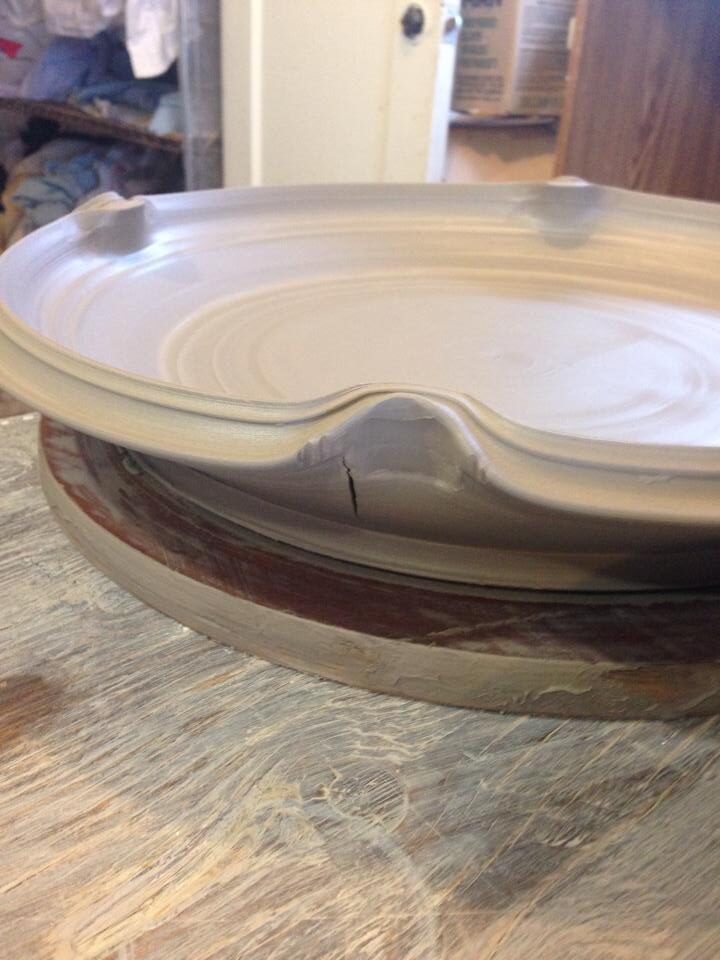
Why do some clays split like this on throwing or forming?
This picture has its own page with more detail, click here to see it.
An example of splitting, where a thrown clay develops a split minutes after throwing. This often happens at stretch-points with sandy or groggy clay bodies or those that have a wide range of particle sizes (e.g. native clays not ground to 200 mesh). The larger particles create networks into which water can penetrate and begin and propagate a split. It is thus wise not to leave water or high-water-content slip on any surfaces experiencing tensile stress during forming.
Tobla Howell throwing Plainsman raku clay.
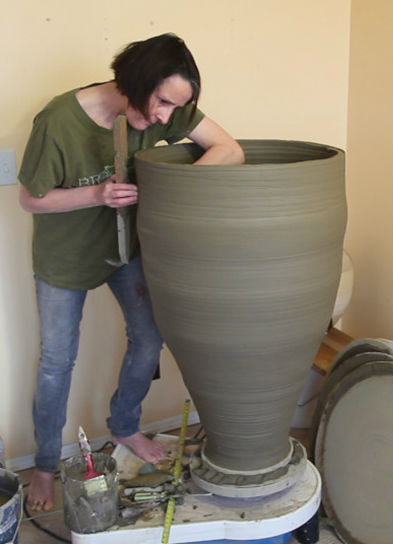
This picture has its own page with more detail, click here to see it.
Links
| Glossary |
Slip Casting
A method of forming ceramics. A deflocculated (low water content) slurry is poured into absorbent plaster molds. As it sits in the mold, usually 10+ minutes, a layer builds against the mold walls. When thick enough the mold is drained. |
| Glossary |
Casting-Jiggering
A process in ceramic production where items are slip-cast first and then finished using a jigger wheel. |
| Glossary |
Jiggering
Jiggering is a process of forming pottery that employs a spinning plaster mold and a tapered template to press soft clay or porcelain against it. |
| Glossary |
Hot Pressing
|
| Glossary |
Dust Pressing
Many ceramic products, especially tile, are formed by pressing high-moisture or binder-containing dust or pelletized dust into steel molds at high pressures. |
| URLs |
https://www.instagram.com/reel/DTso5owEpf8
Chinese potters team-throwing gigantic porcelain vases Also making sections and gluing them together with slip at the almost-dry stage. They throw thick walls and do a lot of trimming at the almost-dry stage. |