"C10RPL" Firing Schedule
Plainsman Cone 10R Firing
Every gas kiln is different so this schedule may not work for you if your kiln does not cool at the same rate or maintain the same atmosphere. Our kiln is brick construction, downdraft, four natural gas burners, about 30 cubic feet. It fires evenly top-to-bottom and front-to-back. We have had and used others but none of them have equaled the quality of firing this can produce. It was built by Luke Lindoe around 1970.
It can rise while reducing so we do not do a separate body and glaze reduction (with an oxidation climb between). Reduction can be kept consistent throughout the kiln, enough to produce a clear bluish flame at the peepholes (with some yellow at the damper). We oxidize for half an hour at the end, turning the gas down enough to allow it to drop about 100F during that time. On shutdown, we seal it up but the temperature still free falls (although slower than a fibre kiln would). We open it at about 200F two days later.
| Step | °C | °F | Hold | Time | |
|---|---|---|---|---|---|
| 1 | 10°C/hr to 120C | 18°F/hr to 248F | 0 | 12:23 | Heat up overnight on pilots |
| 2 | 50°C/hr to 550C | 90°F/hr to 1022F | 0 | 20:59 | |
| 3 | 100°C/hr to 980C | 180°F/hr to 1796F | 0 | 25:17 | |
| 4 | 50°C/hr to 1300C | 90°F/hr to 2372F | 0 | 31:41 | Start light reduction beginning of this step |
| 5 | 0°C/hr to 1280C | 0°F/hr to 2336F | 30min | 31:41 | Oxidation this step |
| 6 | 0°C/hr to 30C | 0°F/hr to 86F | 31:41 |
"Fahrenheit degrees" is not the same as "degrees Fahrenheit". A 100° reading on a Fahrenheit thermometer is equal to a 37° reading on a Celcius thermometer. But "100 Fahrenheit degrees of temperature change" is equivalent "55 Celsius degrees of change". That is an important distinction to understand the above temperature conversions.
Related Information
How many degrees between these cone positions?
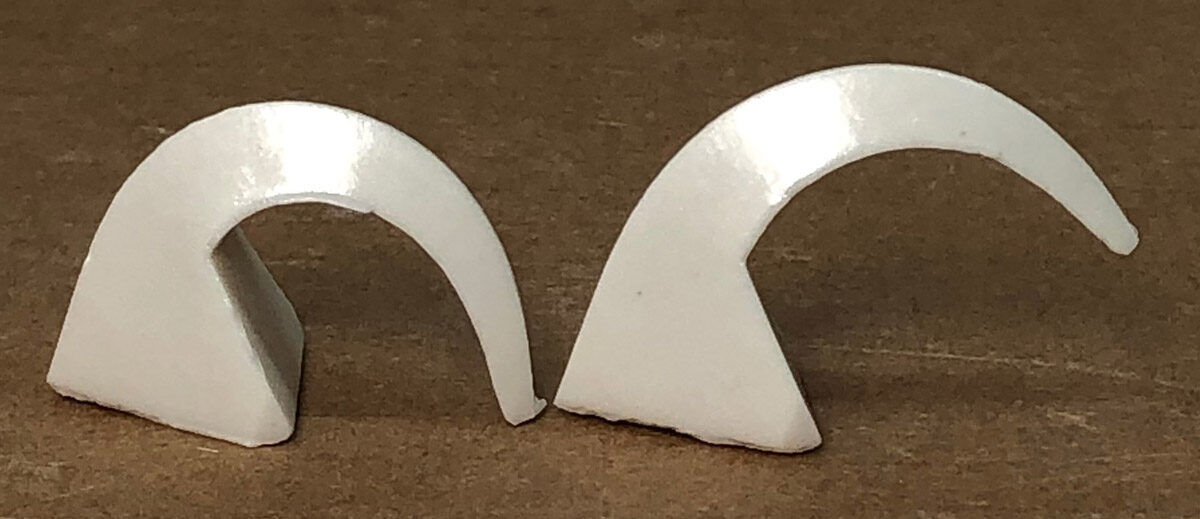
This picture has its own page with more detail, click here to see it.
I was consistently getting the cone on the left when using a custom-programmed firing schedule to 2204F (for cone 6 with ten minute hold). However Orton recommends that the tip of the self supporting cone should be even with the top of the base (they consider the indicating part of the cone to be the part above the base). So I adjusted the program to finish at 2200F and got the cone on the right. But note: This applies to that kiln at that point in time (with that pyrometer and that firing schedule). Our other test kiln bends the cone to 5 o'clock at 2195F. Since kiln controllers fire cone 6 at 2230 (for the built-in one-button firings) your kiln is almost certainly over firing!
Gas kiln near cone 10R in the Plainsman Clays studio
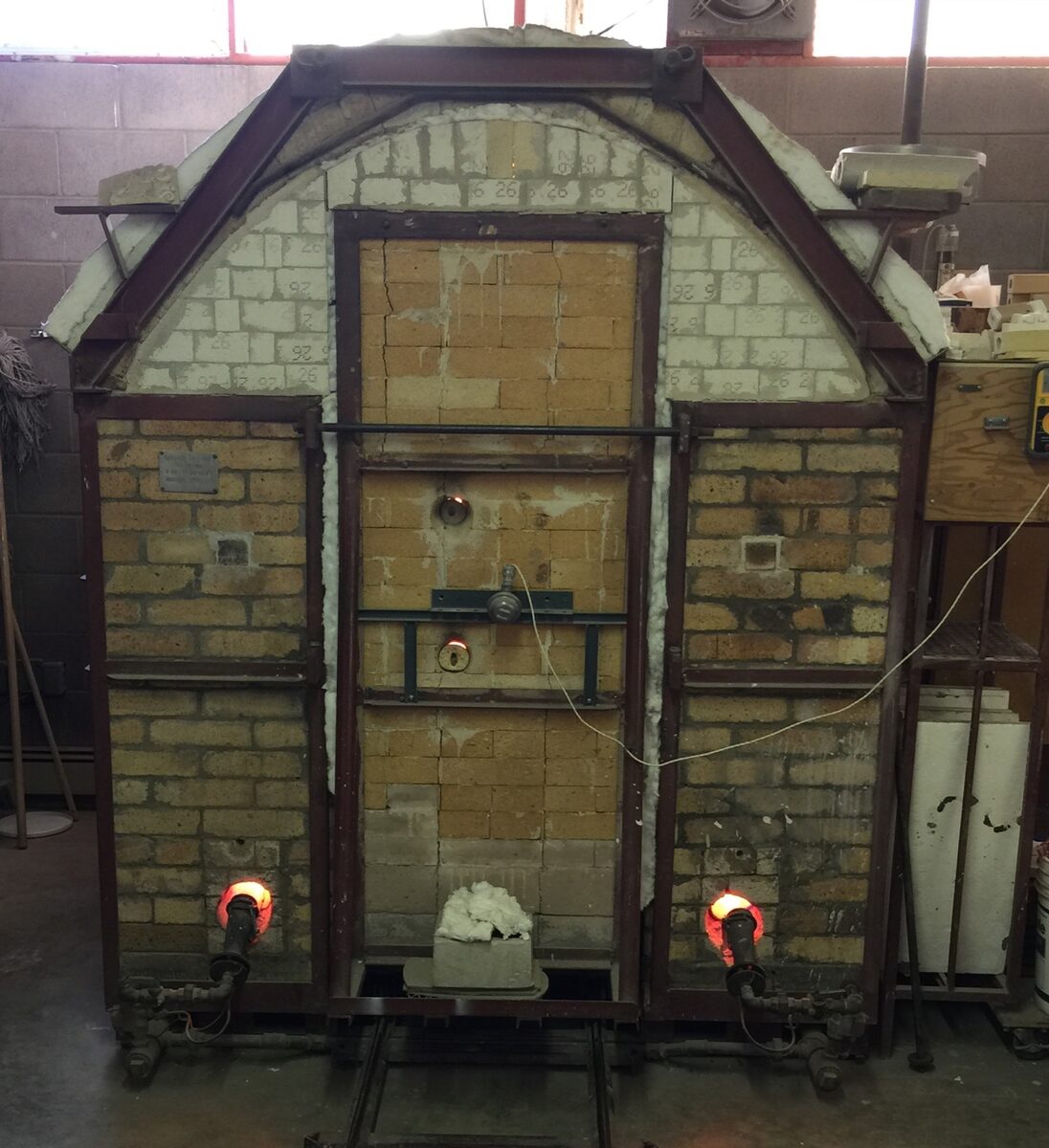
This picture has its own page with more detail, click here to see it.
It is old, but nothing we have ever used fires as evenly and reliably as this downdraft kiln. It was built by Luke Lindoe in the 1960s. I have used it through my entire life as a potter since the early 1970s. Two burners at 2 inches oil-column will take it to 1000F fairly quickly, but it takes 4 burners at 4 inches and 20 hours to get it to cone 10. I can judge the back pressure and degree of reduction by the length and color of the flames at the peepholes and color of the flame passing the damper at the back. Changing the damper position by an eighth of an inch during reduction is enough to discern a change in the flame.
Cone 10R load of fired ware in Plainsman gas kiln
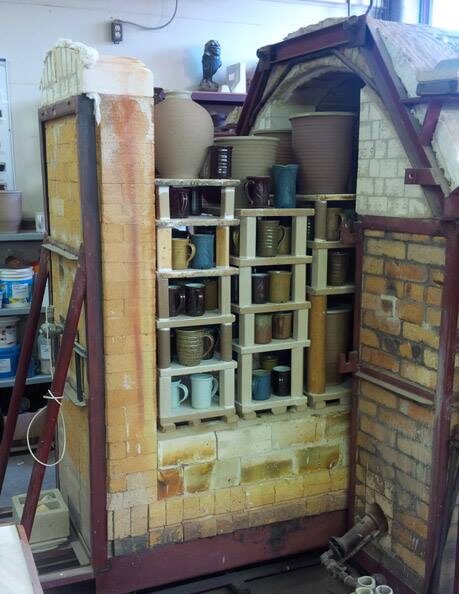
This picture has its own page with more detail, click here to see it.
It fires evenly in temperature and atmosphere from top to bottom, front to back. Nothing more can be expected for any studio kiln. We use the C10RPL firing schedule.
Another view of the gas kiln in the Plainsman clay studio
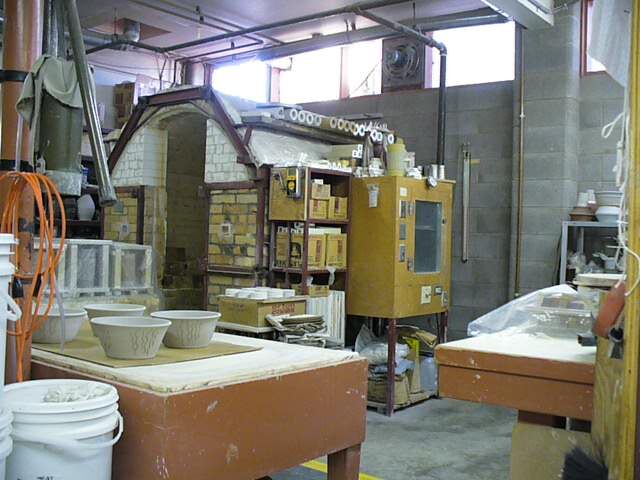
This picture has its own page with more detail, click here to see it.
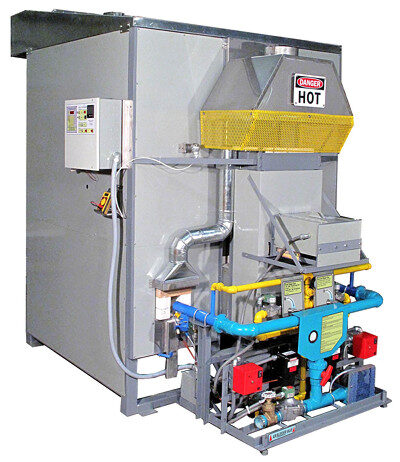
Example of a modern automatic firing reduction gas kiln for use by studio potters
This picture has its own page with more detail, click here to see it.
Courtesy of Bailey Kilns.
Sculpture Clay in functional ware? Yes!
Your browser does not support MP4 video.This is Plainsman Sculpture-clay. At cone 10R it is vitreous, a deep brown low porosity body. The particles of grog create a beautiful surface. The glaze is G2571A bamboo matte. It was fired using the C10RPL schedule. By Tony Hansen.
Links
| Recipes |
GR10-A - Pure Ravenscrag Slip
Ravenscrag all by itself makes a great cone 10 reduction semi-gloss glaze. It also has great working properties. |
| Recipes |
L3341B - Alberta Slip Iron Crystal Cone 10R
By adding a little iron to 100% Alberta Slip you can make an iron crystal glaze. |
| Recipes |
GA10-B - Alberta Slip Tenmoku Cone 10R
You can make a tenmoku from Alberta Slip by adding only 2% iron oxide and 5% calcium carbonate |
| Recipes |
G2571A - Cone 10 Silky Dolomite Matte glaze
A cone 10R dolomite matte having a pleasant silky surface, it does not cutlery mark, stain or craze on common bodies |
| Recipes |
G1947U - Cone 10 Glossy transparent glaze
Reliable widely used glaze for cone 10 porcelains and whitewares. The original recipe was developed from a glaze used for porcelain insulators. |
| Recipes |
GR10-B - Ravenscrag Cone 10R Gloss Base
Cone 10 Reduction glaze made using 90% Ravenscrag Slip. |
| Recipes |
GA10-D - Alberta Slip Black Cone 10R
You can make a black glaze at cone 10R using only 1% black stain in a 100% calcine:raw mix of Alberta Slip |
| Firing Schedules |
Plainsman Electric Bisque Firing Schedule
Three-step to 1832F |
| Typecodes |
Oxidation to reduction kiln conversions
Many potters working in the electric oxidation process, dream of being able to graduate to fire high temperature reduction. As it turns out, your old electric kiln can be converted. These pages provide detail from multiple people who have done it. The effort they have expended is evidence that the process is viable. |