Sodium Carbonate Toxicology
Identification and Uses
CAS Number : 497-19-8
Molecular Formula: Na2CO3
Uses and sources of emission
- Manufacture of soap, softening agents,
- Ceramics.
Toxicology
This product is absorbed by the respiratory and digestive tracts.
Acute effects
- Ocular Contact
Irritation of the eyes.
- Inhalation
Irritation of the higher respiratory tract, pulmonary irritation.
- Ingestion
- Irritation and corrosion of the mucous membranes of the gastro-intestinal tract,
- vomiting (may contain blood),
- diarrhoea,
- abdominal pain,
- collapse,
- death.
- Skin Contact
It can cause redness, oedema.
- Aggravation of Preexistent Medical Conditions
The inhalation of the product can worsen preexistent respiratory problems such as asthma, emphysema and bronchitis.
Skin contact can worsen a preexistent dermatitis.
Effects on development
A study on several animal species suggests the absence of effects on antenatal development.
Effects on reproduction
No data concerning the effects on reproduction has been found in the consulted documentary sources.
Data on mother039;s milk
No data concerning its excretion or detection in mother039;s milk has been found in the consulted documentary sources.
Carcinogenic effects
No data concerning a carcinogenic effect has been found in the consulted documentary sources.
Mutagenic effects
No data concerning a mutagenic effect has been found in the consulted documentary sources.
First aid
- Ocular Contact
Rinse the eyes with water for at least 15 minutes. Seek medical help immediately.
- Inhalation
Bring the individual into a ventilated place and make sure he is still breathing. If there are respiratory problems, give oxygen if there is any available. If the victim does not breathe, give him artificial respiration. Call a physician.
- Ingestion
If the individual is conscious, make him drink water. Do not give anything by mouth to an unconscious person. Do not induce vomiting, call a doctor.
- Skin Contact
Quickly withdraw contaminated clothing. It is necessary to wash skin with water and soap during 5 minutes. Seek medical help if irritation develops.
Stability
This product is unstable under the following conditions: it absorbs humidity from air (hygroscopic). Moreover, there is formation of hydrates from contact with humidity.
Handling
Wear ocular protection. Avoid any skin contact. Ventilate adequately, if not carry a suitable breathing apparatus.
Storage
Store in an airtight container placed in a dry place. Do not store in a container made of aluminium or zinc.
References
- Occupational Medicine,Carl Zenz, last edition.
- Clinical Environmental Health and Toxic Exposures, Sullivan & Krieger; last edition.
- Sax039;s Dangerous Properties of Industrial Materials, Lewis C., last edition.
- Toxicologie Industrielle et Intoxications Professionnelles, Lauwerys R.R. last edition.
- Chemical Hazards of the Workplace, Proctor & Hughes, 4th edition
By Edouard Bastarache
Related Information
Back side of a bag of sodium carbonate (soda ash).
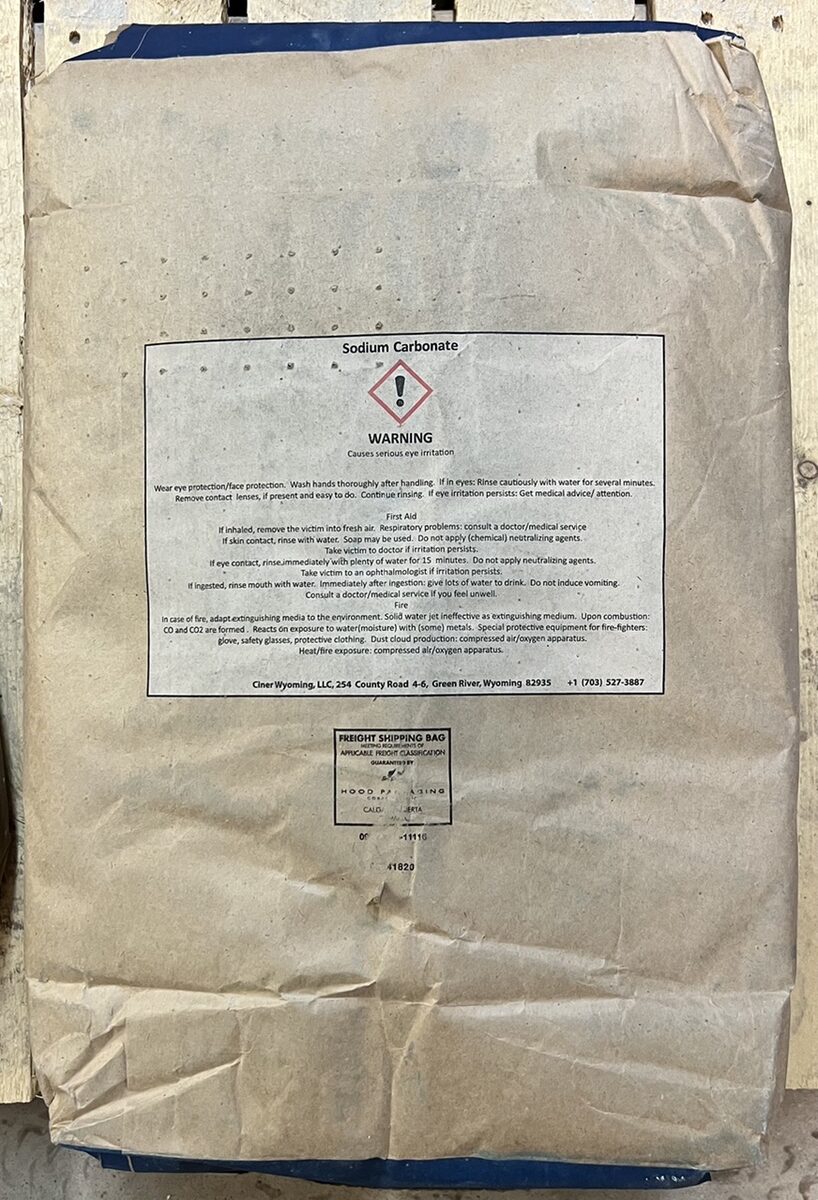
This picture has its own page with more detail, click here to see it.
Causes eye irritation. Prolonged contact with skin may cause irritation.
50 lb bag of soda ash (or sodium carbonate).
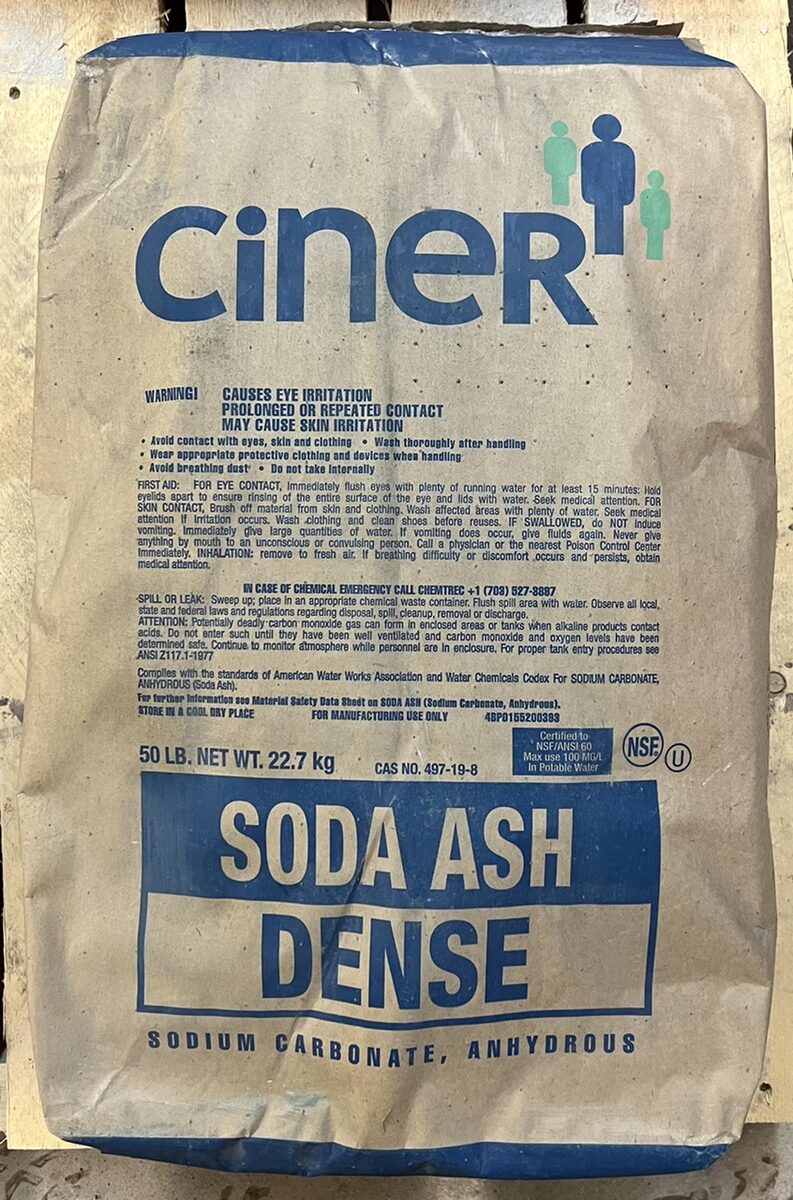
This picture has its own page with more detail, click here to see it.
Soda Ash is soluble and is thus not useful in most ceramic glazes. However that very solubility makes it very useful to control the electrolytics of ceramic slurries. This is the dense variety, non-hydrous.
Links
| Materials |
Sodium Carbonate Heptahydrate
|
| Materials |
Sodium Carbonate Decahydrate
|
| Materials |
Sodium Carbonate
|
| Typecodes |
Article by Edouard Bastarache
Edouard Bastarache is a well known doctor that has written many articles on the subject of toxicity of ceramic materials and books on technical aspects of ceramics. He writes in both English and French. |