Shino Glazes
Traditional Japanese high feldspar glazes having cream to orange color flashing or blushing. Potters today seek to emulate the Shino appearance using a wide range of recipes.
Details
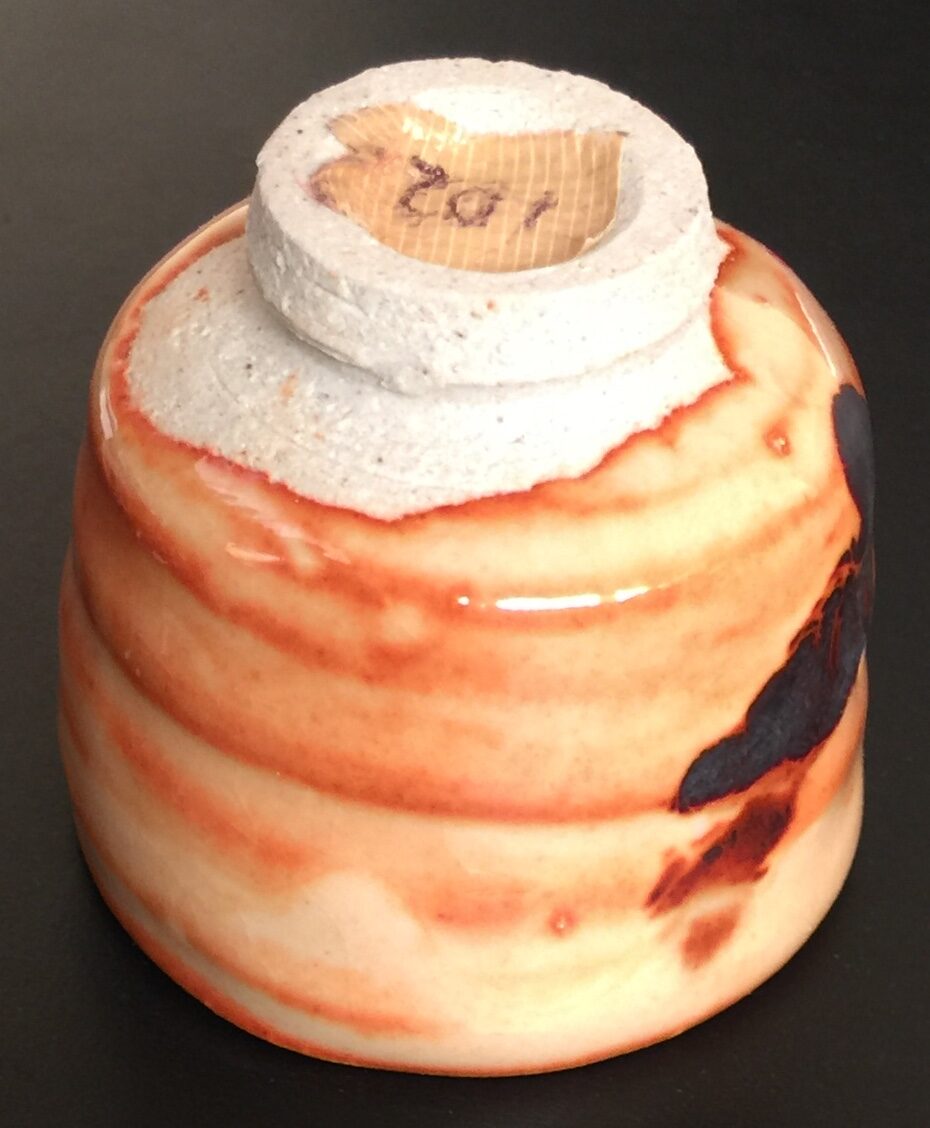
Shino glazed small bowl from Japan
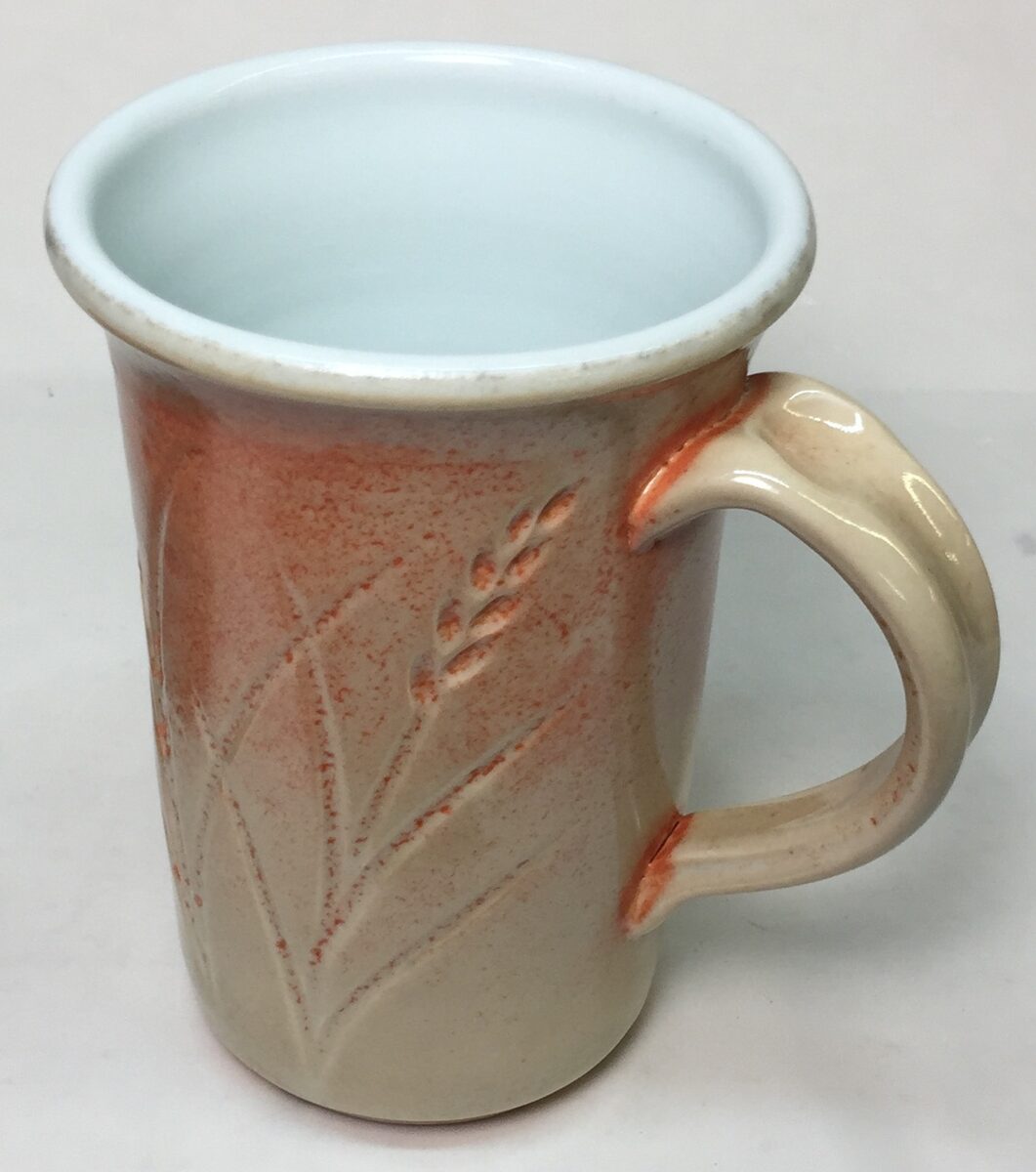
One of my efforts at Shino (see below)
Related Information
Closeup of Shino glazed small bowl from Japan
This picture has its own page with more detail, click here to see it.
Clay is vitreous and heavily grogged. But it is white burning. Notice the orange color is developing at the glaze/body interface and shows where the glaze is thin. This is glossier than what one would normally expect a Shino to be.
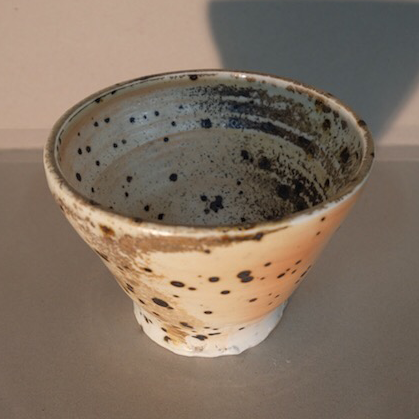
Heavily speckled reduction fired porcelain Shino bowl by Glenn Lewis
This picture has its own page with more detail, click here to see it.
This effect was created by wedging 10 mesh ironstone concretions into the soft porcelain.
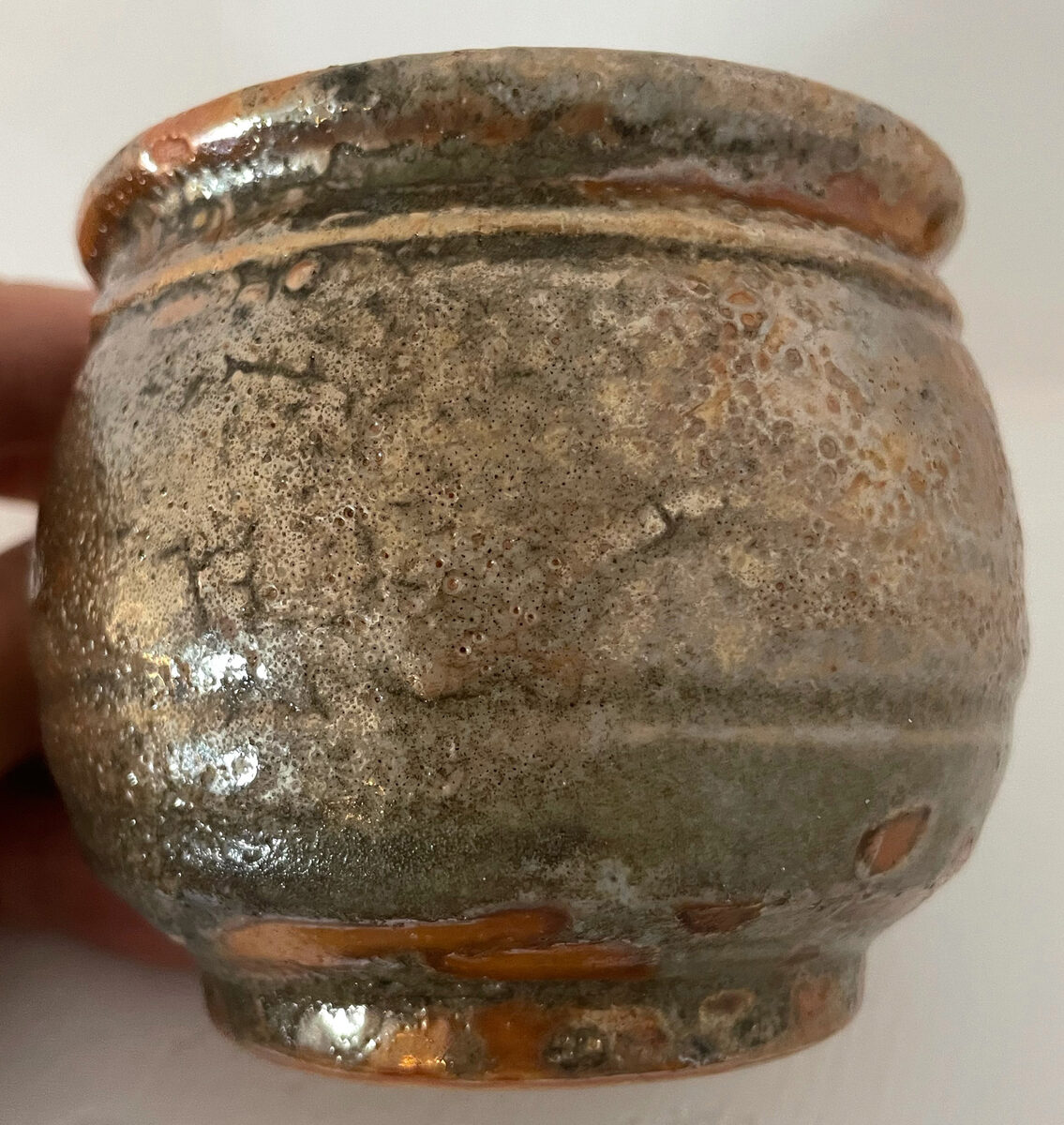
Shino bowl made by Joshua Miller
This picture has its own page with more detail, click here to see it.
White body. Double fired, first to cone 11 (reduced from 1800F up as for copper reds). A thin second layer of the Shino glaze was applied and a second slow-climb firing was done to cone 05, this produced the metallic effect. This is a Malcom Davis glaze (with Redart). Joshua Miller, the creator of this piece, mentors under his father, Victor Miller.
Closeup of unglazed surface of small Shigaraki bowl
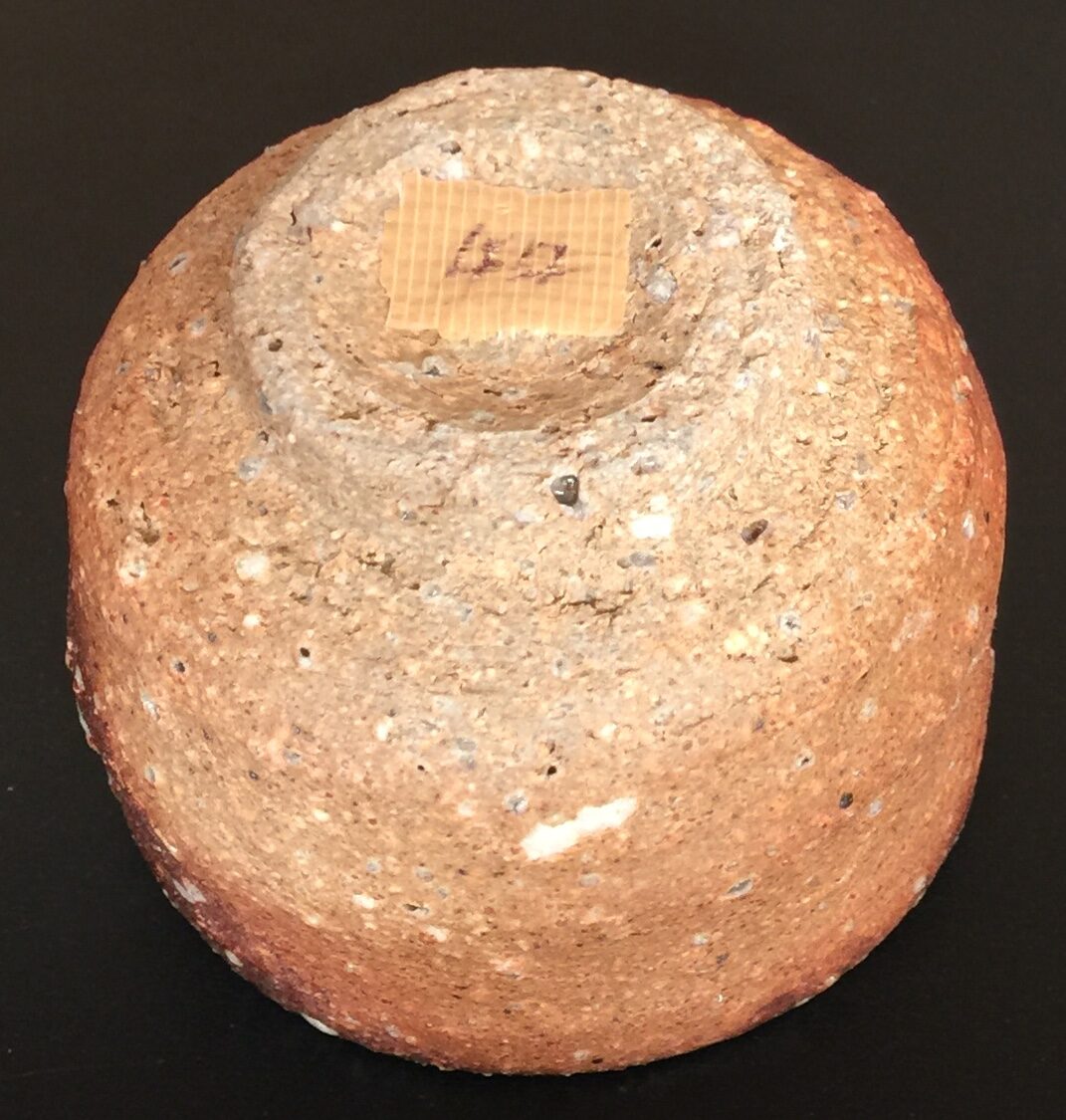
This picture has its own page with more detail, click here to see it.
This is the unglazed surface. Very heavily grogged, very large grog particles.
Closeup of unglazed surface of small Bizen bowl
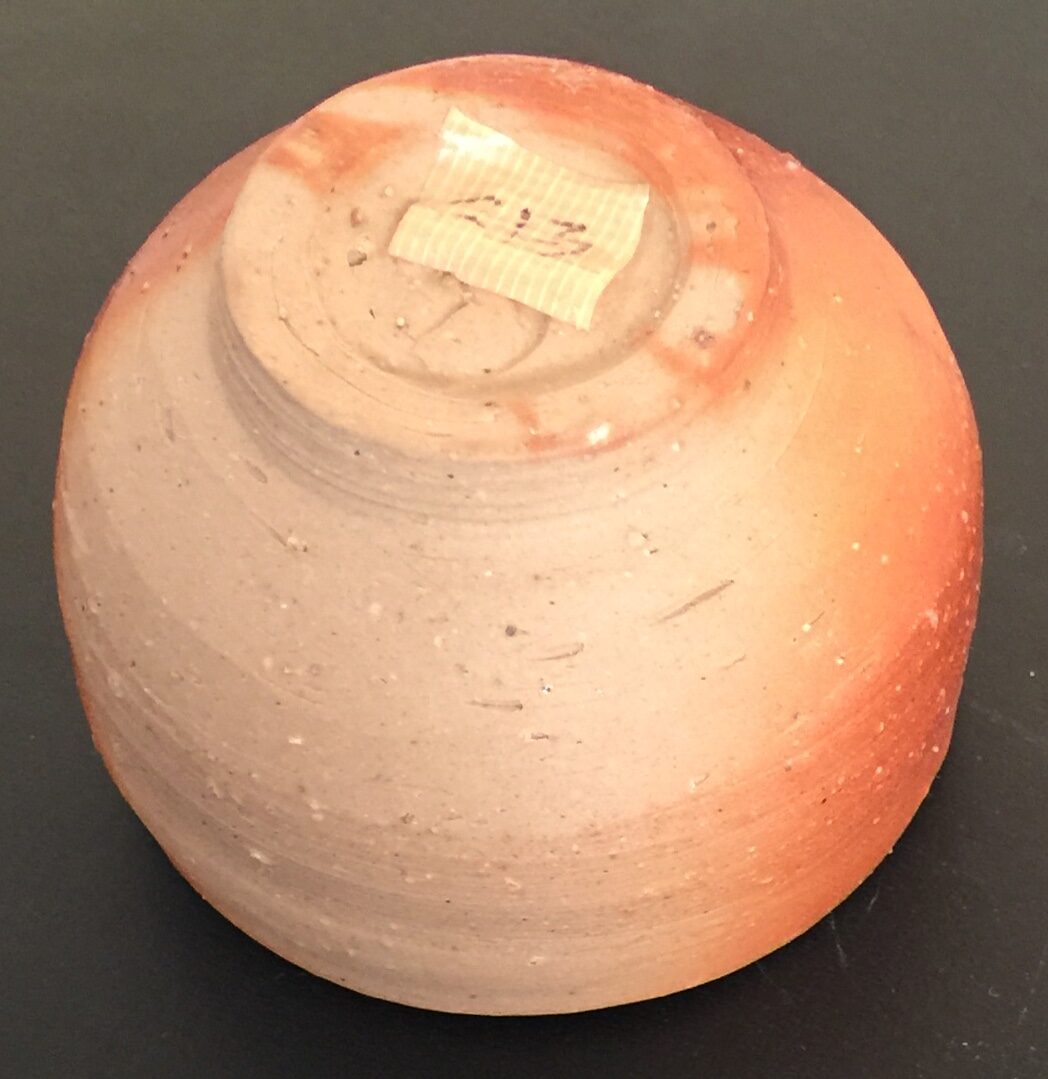
This picture has its own page with more detail, click here to see it.
The fired clay is vitreous and lightly grogged (large particles).
G3840 Shino on Grolleg/New Zealand kaolin porcelain at cone 10R
This picture has its own page with more detail, click here to see it.
The color is developing despite the fact that very little iron is available from the body. I have glazed the inside of this mug with a durable liner glaze to make it functional. The porcelain contains more than 30% silica but the Shino is still crazing on it.
Calculating the recipe of a cone 10R Shino glaze
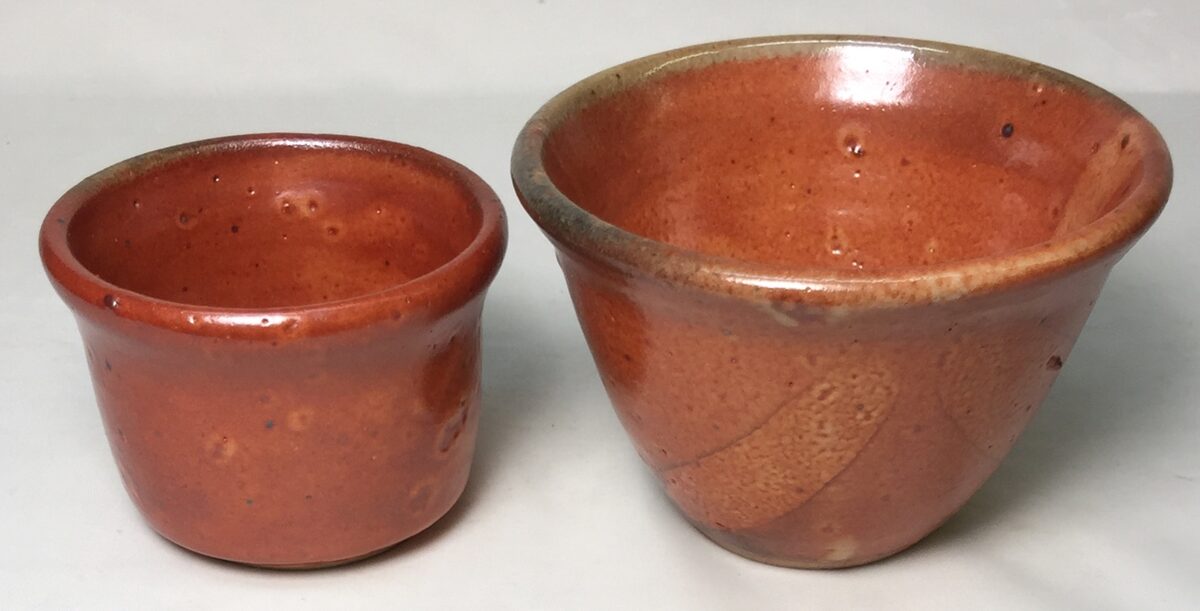
This picture has its own page with more detail, click here to see it.
The wax resist brushstrokes (done right after glazing) are clearly defined indicating that soda migration to the surface during drying is an important mechanism of the effect. Some carbon trapping is also visible on the lower section of the larger bowl (and other pieces in other places in the kiln). The glaze has been applied fairly thinly so no whiter areas are visible. This was part of a project I did to understand, not what Shino glazes look like, but what they are. Chemically. The code for the project was G3840.
Links
| Glossary |
Carbon trap glazes
A type of ceramc glaze. |
| Glossary |
Carbon Burnout
Ceramic materials, especially clays, often contain carbon and organic compounds. When they are fired in a kiln, these must burn out, often producing complications. |
| Glossary |
Calcination
Calcining is simply firing a ceramic material to create a powder of new physical properties. Often it is done to kill the plasticity or burn away the hydrates, carbonates, sulfates of a clay or refractory material. |
| Glossary |
Ceramic Glaze
Ceramic glazes are glasses that have been adjusted to work on and with the clay body they are applied to. |
| URLs |
https://insight-live.com/insight/share.php?z=Lt1ZK6wGyE
Shino/Bizen Formulation Project at Plainsman Clays |