Steatite
Alternate Names: Soapstone
Notes
Steatite occurs in nature as soap stone. In ceramics, we known it as talc. Like dolomite and calcium carbonate, it has the curious property of being refractory when used pure but being a flux when combined with other materials.
Steatite is also a manufactured ceramic, a crystalline form of magnesium silicate (called synthetic steatite). It has relatively good strength and can service at temperatures up to 2,000°F (1180°C). It is much less expensive than sintered ceramics like alumina or zirconia. It's pressed density determines the porosity, compressive and flexural strength, conductivity and resistivity of the part being made.
Steatite is popular for making ceramic components where there is no need for tight dimensional tolerances, chemical purity or high mechanical stress - a common application is parts for electrical heaters.
Related Information
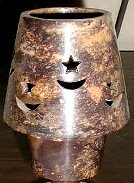
This picture has its own page with more detail, click here to see it.
Soapstone Steatite Carving
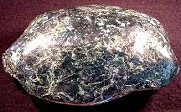
This picture has its own page with more detail, click here to see it.
Serpentine Soapstone
Links
| Oxide | Analysis | Formula | Tolerance |
|---|
| URLs |
http://www.associatedceramics.com/steatite.htm
Steatite properties page at Associated Ceramics |
| URLs |
http://en.wikipedia.org/wiki/Soapstone
Soapstone at Wikipedia |
| Glossary |
Refractory
In the ceramic industry, refractory materials are those that can withstand a high temperature without deforming or melting. Or can be sintered into super materials. |
| Materials |
Sierralite Talc
|
| Materials |
Alumina
|
| Materials |
Talc
A source of MgO for ceramic glazes, a flux or thermal expansion additive in clay bodies, also used in the manufacture of cordierite. |