Cresta BB
Alternate Names: Gulgong clay
| Oxide | Analysis | Formula | Tolerance |
|---|---|---|---|
| CaO | 0.10% | 0.01 | |
| K2O | 0.20% | 0.01 | |
| MgO | 0.50% | 0.05 | |
| Na2O | 0.30% | 0.02 | |
| TiO2 | 1.00% | 0.05 | |
| Al2O3 | 25.60% | 1.00 | |
| SiO2 | 63.10% | 4.18 | |
| Fe2O3 | 0.61% | 0.02 | |
| LOI | 8.60% | n/a | |
| Oxide Weight | 364.21 | ||
| Formula Weight | 398.48 | ||
Notes
The mine at Gulgong, NSW, Australia, produced a white, plastic raw clay that was used by many people (and manufacturers) to make clay bodies of many types (especially stoneware). It was prized as the best combination of whiteness and plasticity available in the country. It has a very low iron content and very low concentration of fluxes.
In 2015 it was determined to be uneconomic by the manufacturer so not more stockpiles have been made. In addition the last of the stockpiled Gulgong clay appears to be slightly different (less white and plastic). As a result companies had to reformulate their bodies, often the replacement being of lower quality.
Related Information
Gulgong Clay from NSW, Australia
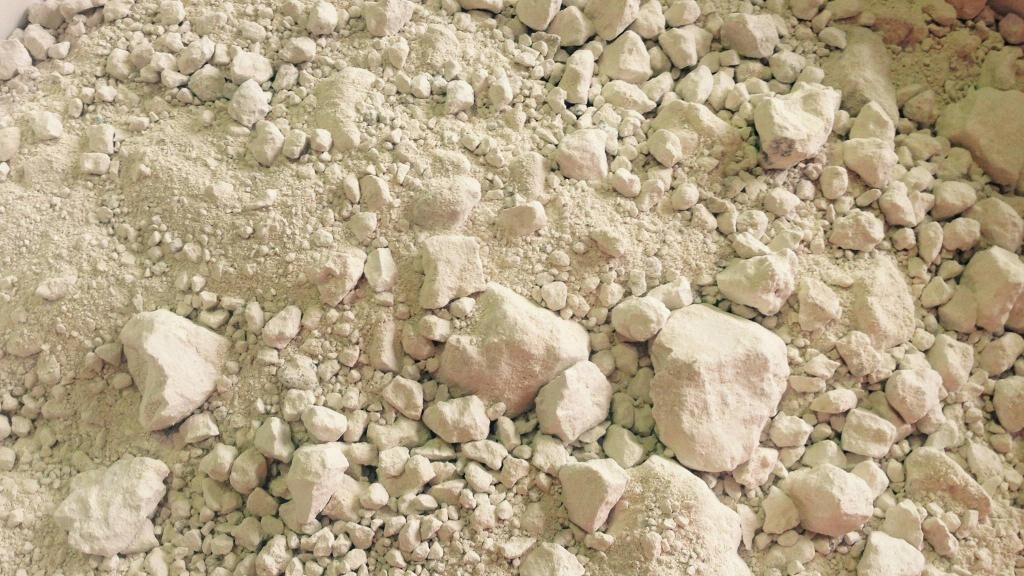
This picture has its own page with more detail, click here to see it.
Prized for its whiteness and plasticity. A base for many stonewares.