Feldspar
Feldspars typically contain 5% or more free silica and thus pose similar hazards to quartz. They are employed in large percentages in almost all clay bodies and in most glazes. There are hundreds of different brand names, try to get a quartz content figure from your supplier.
Related Information
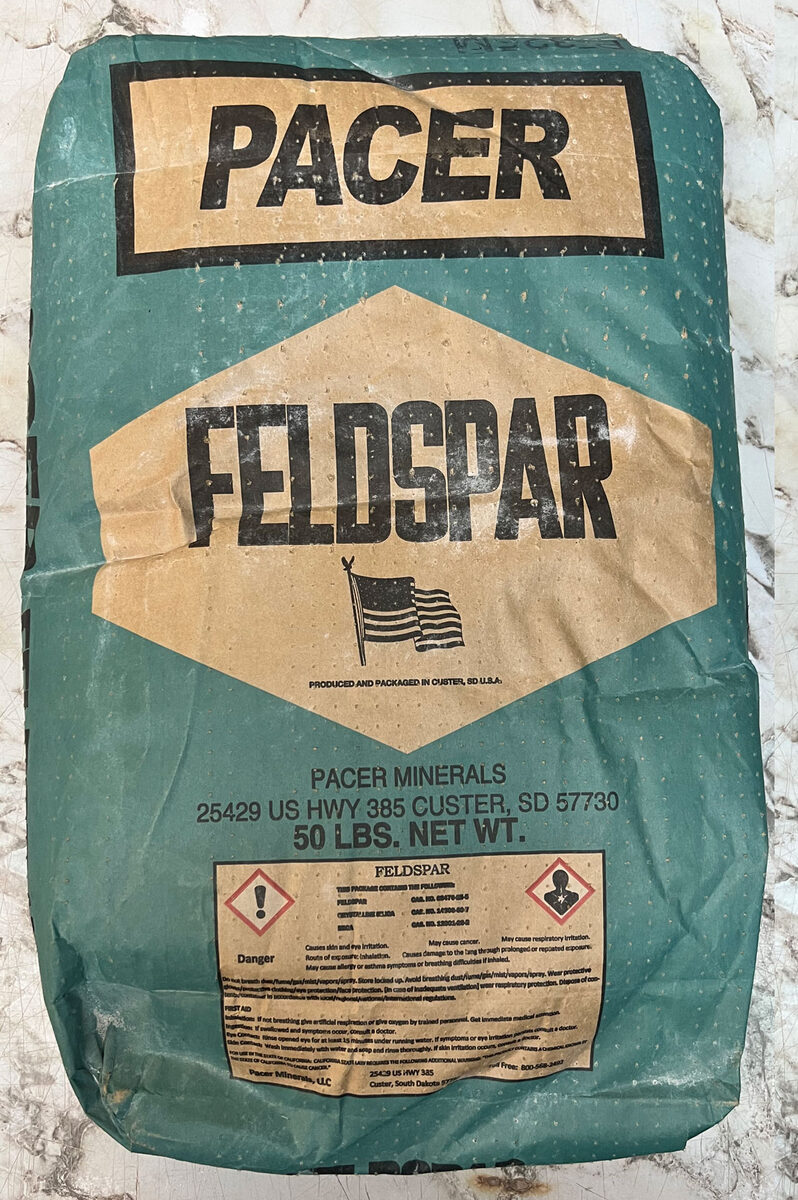
Original container bag of Custer Feldspar
This picture has its own page with more detail, click here to see it.
The back of the bag is blank. The warning label on the front mentions feldspar, crystalline silica and mica.
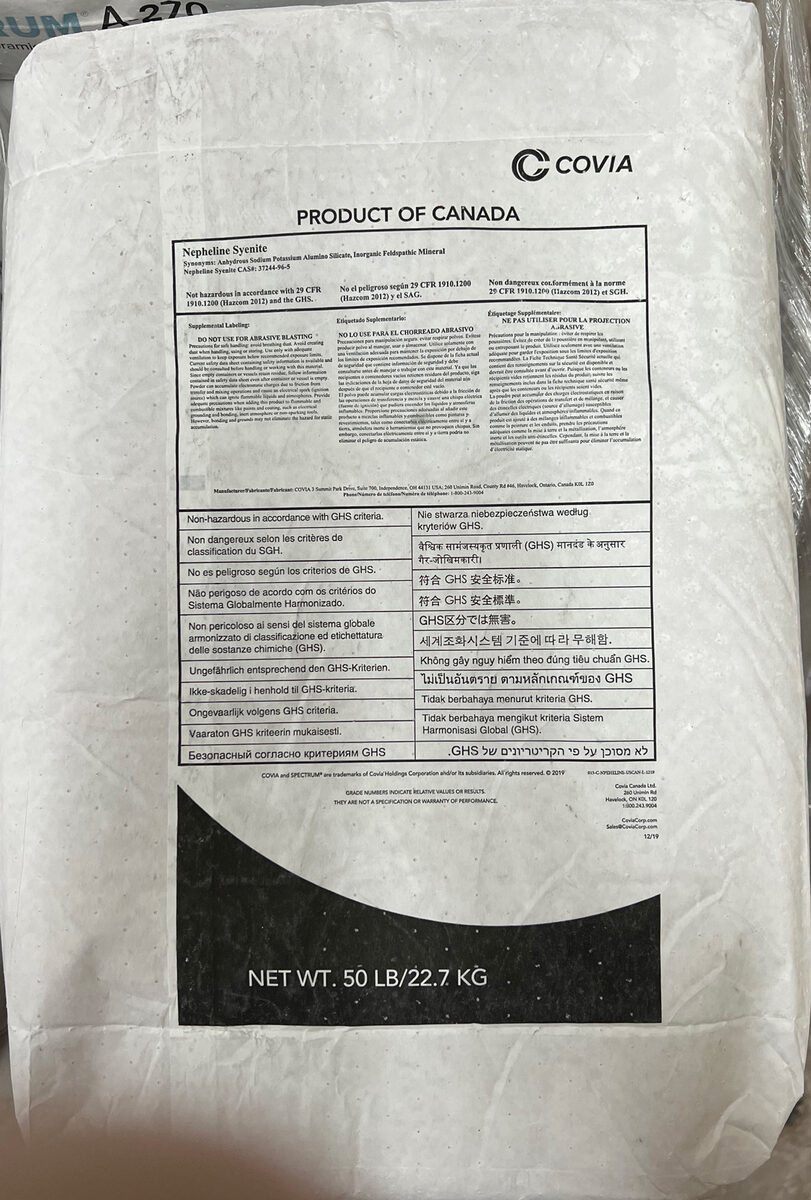
Warnings on back of Covia nepheline syenite bag 2021
This picture has its own page with more detail, click here to see it.
It is stated as non-hazardous in accordance with GHS criteria. Although like feldspar in chemistry, mineralogically nepheline syenite powder is a gound igneous rock, it does not contain quartz.
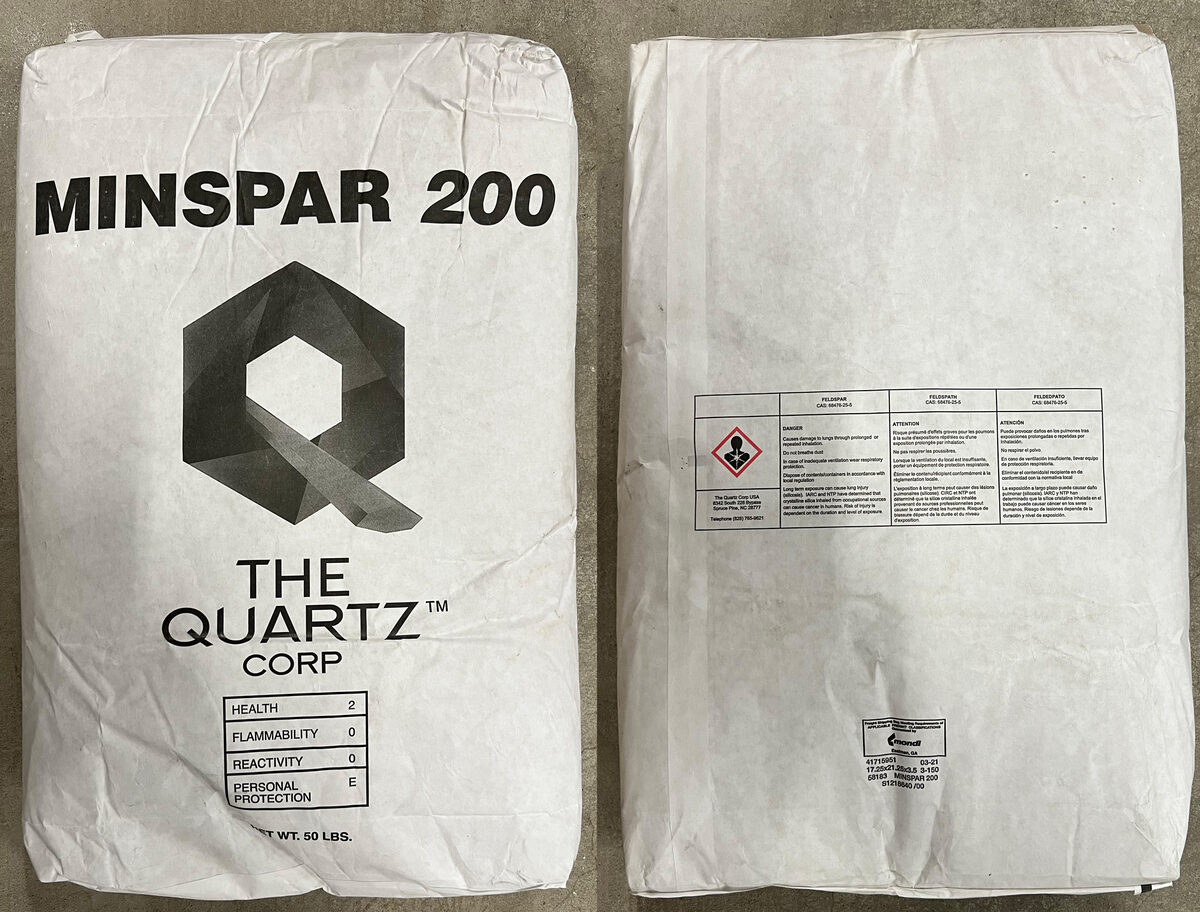
Minspar 200 original container bag - front and back
This picture has its own page with more detail, click here to see it.
Links
| Materials |
Feldspar
In ceramics, feldspars are used in glazes and clay bodies. They vitrify stonewares and porcelains. They supply KNaO flux to glazes to help them melt. |
| Materials |
Potash Feldspar
A feldspar having a KNaO content that predominates in potassium. |
| Materials |
Soda Feldspar
A feldspar having a KNaO content that predominates in sodium. |
| Materials |
Calcium Feldspar
|
| Materials |
Spodumene
Spodumene is a lithium sourcing feldspar, an alternative to lithium carbonate to supply Li2O to ceramic glazes. Contains up to about 8% Li2O. |
| Materials |
Feldspath ICE 10
|
| Materials |
Pegmatite
|
| Materials |
Nepheline Syenite A270
|
| Materials |
Nepheline Syenite
|
| Materials |
Custer Feldspar
The most common potash feldspar used in ceramics in North America. While having been a standard for many decades its supply appears in doubt in 2024. |
| Materials |
Covia Nepheline Syenite
|
| Materials |
Nepheline Syenite Norwegian
|
| Hazards |
Quartz Toxicity
Extended exposures to lower concentrations or less frequent exposures to higher concentrations can cause silicosis. |